
The baseball transfer portal closes today, so this felt like the right moment to take stock of the cycle itself: the volume of players who have entered, and the timing rules that continue to create confusion for players, fans, and anyone trying to follow roster movement across the sport.
The first question is simply what the volume has looked like this year. While the number of players in the portal is still substantial, it is down from 2025, which makes sense given that the extra COVID eligibility years have now largely worked their way out of the system. That said, the total still trails only 2025 in overall volume, which is somewhat surprising. Even without the COVID-related backlog, this year's portal has still surpassed many of the prior COVID-era cycles.
That is probably the clearest takeaway from this year's window. The portal may look different without COVID exemptions adding pressure to the system, but the volume of movement is still significant. This is no longer just a temporary eligibility issue. It has become a normal part of how college baseball rosters are managed.
Down from 2025, but still the second-highest full-window total on record.
The full June 1 to June 30 window. Even without the COVID backlog inflating the market, this year's total cleared most of the COVID-era cycles outright.
How the cycles compare
Down from 2025, but tracking right alongside the post-COVID baseline.
Cumulative unique entrants across the full portal window (Day 1 to Day 30) for the last three baseball cycles. 2026 finished second only to 2025, edging out 2024.
The shape of the chart is the real story. Even with COVID eligibility no longer feeding the market, the 2026 line is hugging the 2025 curve far more closely than you might expect, and it is running ahead of the 2024 pace for most of the window. The portal did not snap back to a pre-COVID normal. It settled into a new one.
Volume also is not spread evenly across the sport. The entrant pool splits across Division I, II, and III, and the mix shifts from year to year. The chart below breaks each cycle down by level, and you can pull up the top 20 entrants from any division in any year.
Who actually enters, by level.
Unique baseball portal entrants by division for the last three cycles. Hover or tap a segment to see that division's top 20 entrants for the year.
Bar length is scaled to the largest cycle (6,254 in 2025).
Division I · 2026
- 1Connor Shouse
 → in portal
 - 2Jake Hanley
 →
→
- 3Nate Savoie
 →
→
- 4Jackson Hotchkiss
 →
→
- 5Cam Johnson
 → in portal
 - 6Angel Laya
 → in portal
 - 7Payton Brennan
 → in portal
 - 8Bino Watters
 →
→
- 9Mason Eckelman
 → in portal
 - 10Gio Colasante
 → in portal
 - 11Blake Morningstar
 →
→
- 12AJ Evasco
 →
→
- 13Travis Sanders
 →
→
- 14Matt Conte → in portal
- 15Caylon Dygert
 →
→ - 16Isaac Cadena
 →
→ - 17Sebastian Pisacreta
 →
→ - 18Alex Valentin
 →
→ - 19Adam Agresti
 → in portal
 - 20Braydon Kersey
 →
→
The timing question: when can a player enter?
The technical answer is that a player can enter the portal at any point. The practical answer is that the timing only works without penalty if the player meets certain exemptions or criteria. That is where a lot of confusion comes from. A player may appear in the portal in August, December, April, or May, and people naturally wonder how that is possible if the Division I baseball portal window runs from June 1 through June 30.
The answer depends on the player's situation.
The clearest way to understand the exceptions is to look at the players who have used them. Each of the cases below sits in the same general portal conversation, but the rules behind the entries are not the same.
Same conversation, different rulebooks.
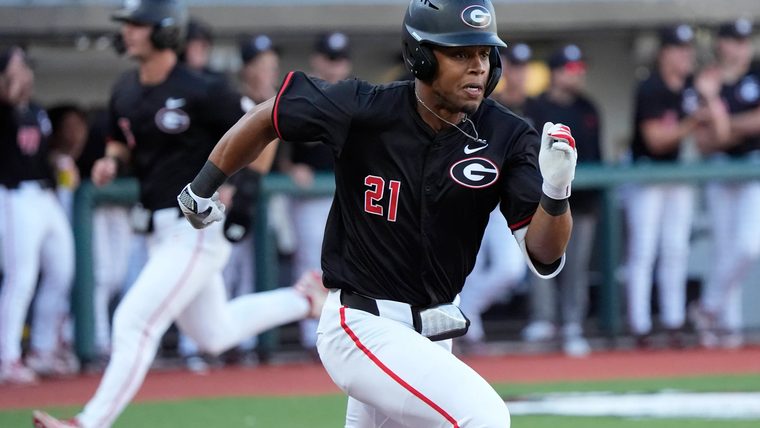
Devin Obee
Grad transfers are the clearest case of players who can enter outside the standard window without penalty. A player graduating in December can enter during the winter and suit up for a new team in February.
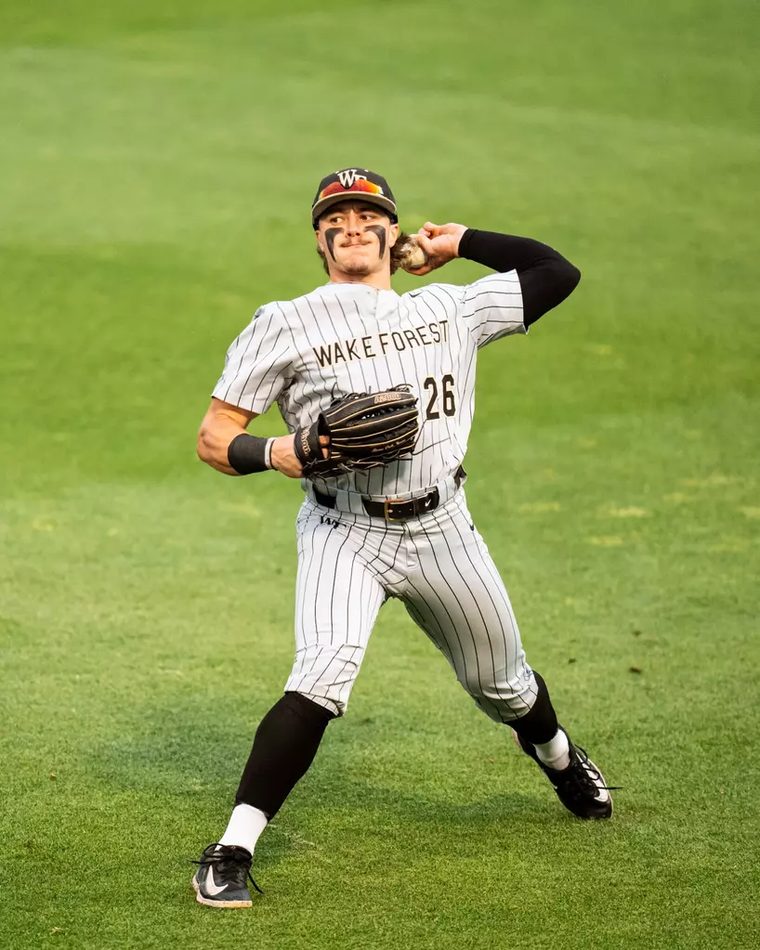
Matt Scannell
Ivy players often enter during the fall or winter while still finishing school, then play one final season before moving on. The Ivy League does not award athletic scholarships and historically did not allow graduate students to compete.
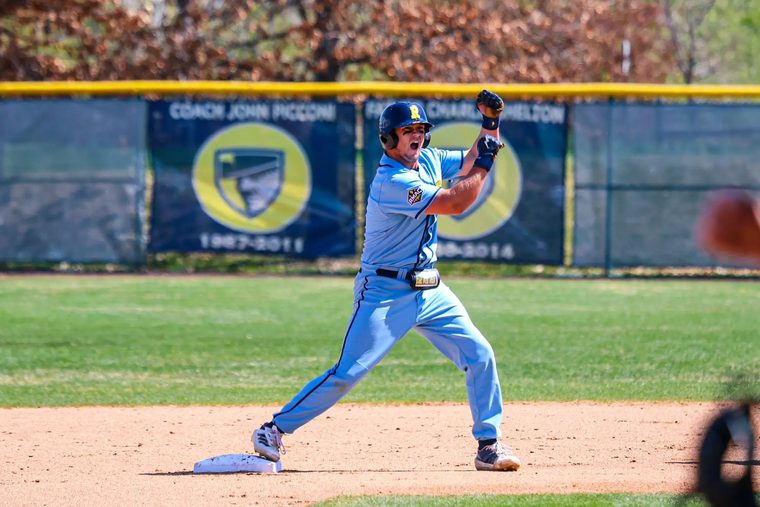
Ethan Wood
Division II and Division III players can enter at any point. Whether that is ideal for roster management or morale is a separate discussion, but they are not restricted to the Division I window the same way.
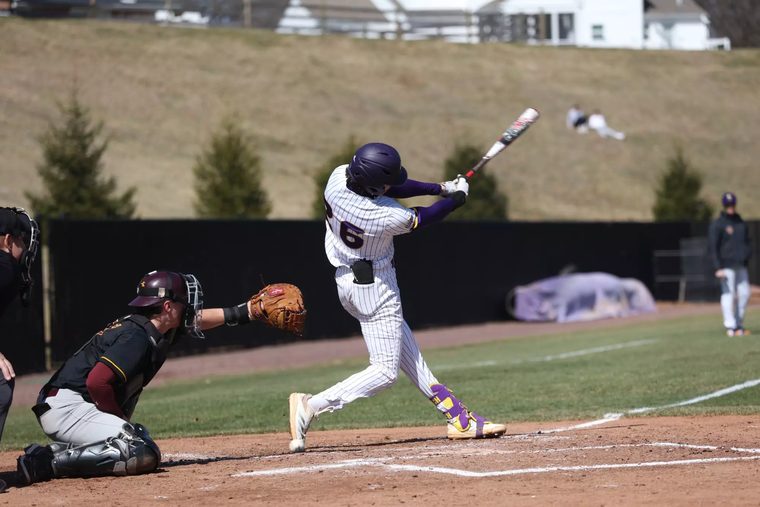
Landen Rozich
Players who drop down a division can play right away. You often see these decisions in December, after fall conversations clarify a role for the spring. Rozich had a stellar two-way year for West Chester in 2026.
Those four are the cleanest illustrations, but they are not the only ways a player ends up in the portal off schedule. A couple more categories round out the picture. Rozich, for his part, had a strong year both on the mound and at the plate as a true freshman at Division II powerhouse West Chester.
Some players can enter outside the standard window because of something that changed at their school, such as a program that will no longer participate in the sport. Purdue Fort Wayne in the 2025 class is a good example, as most of the team entered on May 23, before the 2025 portal window had officially opened.
When a head coach leaves, players are granted a 15-day window to enter without penalty. The reasoning is straightforward: if the coach central to a player's development plan leaves, the player gets a short window to reassess. When Tony Vitello left Tennessee on October 23, 2025, every Vol could have entered during that window. To Josh Elander's credit, not a single one did.
The calendar question
It will be interesting to see what happens with the calendar going forward. Softball has already adjusted its portal schedule to look more like basketball, with a 15-day window immediately following the national championship. Baseball had a proposed option as well, but thankfully decided to keep the previously agreed-upon timeline.
That matters because baseball has a few unique roster-building challenges. The MLB Draft overlaps with the roster construction period. Summer ball is going on. Some players are still trying to understand their professional interest. Coaches are trying to balance incoming freshmen, portal additions, returning players, and draft-eligible players who may or may not make it to campus. A shorter window may sound cleaner, but it could also create more pressure in a sport where the roster picture is often not settled until later in the summer.
June 30 is the deadline for certain Division I players to enter the portal. It is not the deadline to commit. It is not the deadline for coaches to keep evaluating. It is not the date when rosters suddenly become final.
It is important to clarify what the closing of the portal does and does not mean. In many cases, the closing of the portal simply moves the cycle into its next phase. The entries slow down, but the conversations continue. Commitments continue. Draft decisions still have to play out. Programs will keep adjusting as they get a clearer picture of who is returning, who is signing professionally, and where needs still exist.
That is why the timing rules matter. A graduate transfer entering in August is not the same as a Division I underclassman entering during the June window. A Division II player entering in April is not operating under the same restrictions as a Division I player trying to transfer to another Division I program. A player entering after a coaching change is not the same as a player entering because his fall role was not what he hoped it would be.
All of those names may appear in the same general portal conversation, but the rules behind the entries are not always the same.
The portal is here to stay.
As this year's window closes, the main takeaway is that the portal remains a major part of college baseball even without the extra COVID eligibility years driving the market. The volume is down from 2025, but it is still historically high. The timing rules still create confusion, and the calendar may continue to be discussed in future years, especially as other sports adjust their windows.
A new normal, not a COVID hangover.
Second-highest full-window total on record despite the eligibility backlog clearing out. Roster movement at this scale is now a permanent feature of the sport.
Same conversation, different rulebooks.
Grad transfers, Ivy players, division drop-downs, discontinued programs, and coaching changes each enter on their own terms. The June window is only one lane of many.
With the window closing today, the 2026 cycle reaches the end of its entry period. Best of luck to all of the players who entered this year, and all the best in 2027.